I visited Croatia in 2011 and spent 3 days in Zagreb. I found it to be a charming town with some lovely churches and a large number of interesting museums. What I found particularly interesting is that
Zagreb is divided into two parts – the Upper Town (or
Old Town), and the Lower Town (the Modern Town). A funicular connects the two
parts. The two parts of the town have quite a different character, and not surprisingly, I found the Old Town a lot more interesting.
Zagreb is a town with a population of
780,000 and it is the capital and largest city of Croatia. Croatia declared its
independence from the former Yugoslavia in 1991. Fierce fighting followed for
the next four years, between the Croatians and the Serbs living in Croatia, who
were assisted by the Yugoslav People’s Army. Post 1995, Croatia has prospered
and gone on to become a part of the EU in 2004 and NATO in 2009.
Earlier in its history, Croatia was a
part of the Austro Hungarian Empire, under the Habsburgs. It declared
independence in 1918. Later, after World War II, Croatia was a part of
Yugoslavia, along with Serbia, Slovenia, Bosnia, Macedonia and Montenegro. Tito
held the country together until his death in 1980. Thereafter, the country’s
split was inevitable, due to the unrest between the many different ethnic
communities.
The Church of St Mark, in the Upper Town,
stands out because of the tiled roof that has the coat of arms of Croatia and
Serbia. The origins of the church date back to before 1256
. The church has a Gothic portal completed back
in 1377. The portal has 15 figures, including those of Jesus, Mary, St Mark and
the 12 Apostles.
 |
| Church of St Mark |
 |
| Gothic Portal at Church of St Mark |
Zagreb Cathedral dates back to the 11th century, but the present structure was built largely after a big earthquake in
1880. The cathedral has two spires that stand at a height of 105 meters.
The Tomb of Cardinal Alojzije Stepinac lies inside the
cathedral. He was persecuted during the Communist regime, but was later
beatified by Pope John Paul II.
 |
| Zagreb Cathedral |
 |
| Virgin Mary Column, Zagreb Cathedral |
 |
| Tomb of Cardinal Alojzije Stepinac, Zagreb Cathedral |
 |
| High Altar, Zagreb Cathedral |
 |
| Pulpit, Zagreb Cathedral |
The Archbishop’s Palace is right next to Zagreb Cathedral and surrounds it on
three sides. The complex has multiple towers, built in 1469 to fortify the town
against the Turks. The palace in its present form was however completed only in
1730.
 |
| Archbishop's Palace |
The Funicular that connects the Lower Town and the Upper Town makes life a lot easier for tourists.
 |
| Funicular |
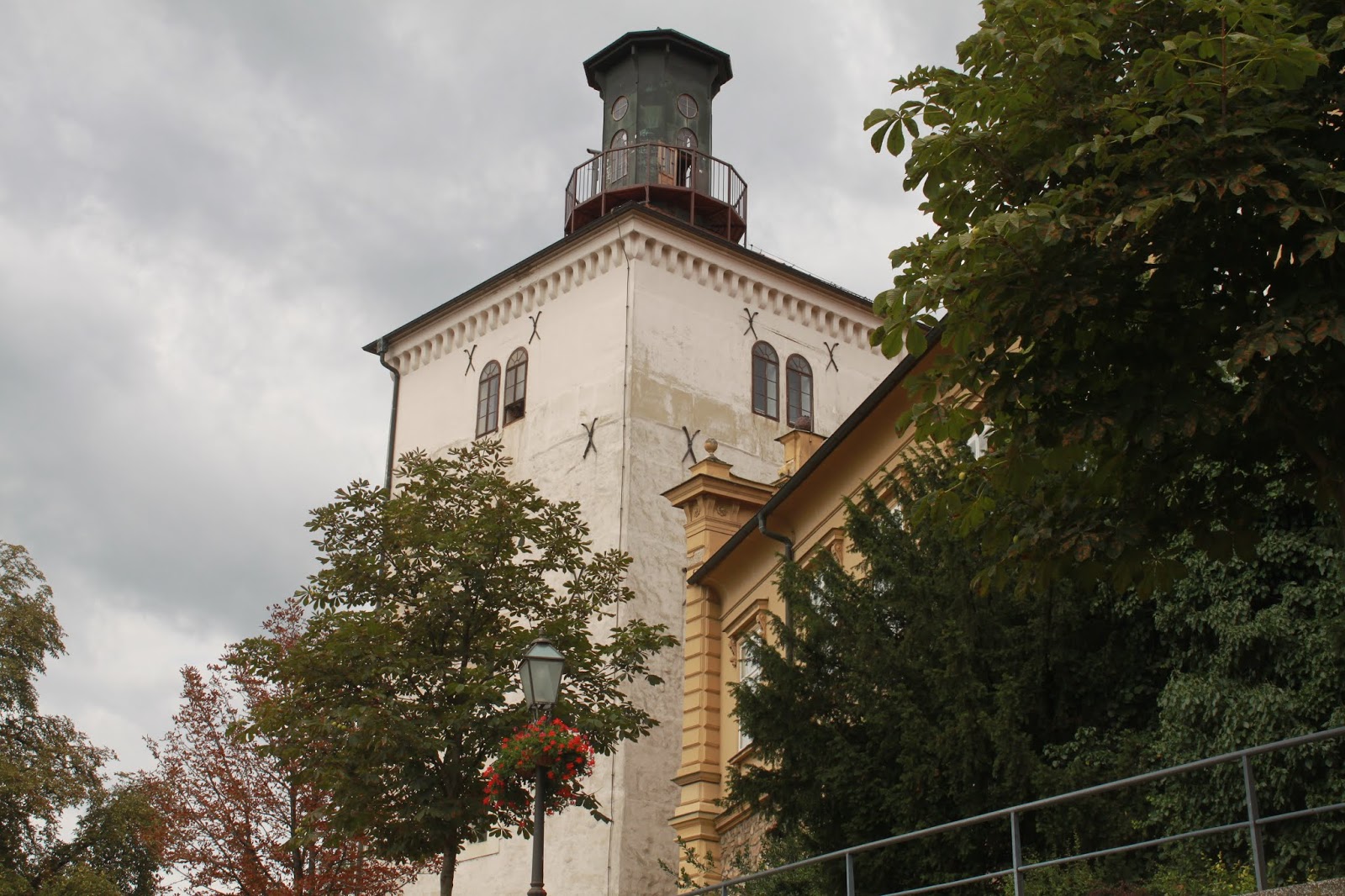
The Lotrscak Tower dates
back to the 13th century. Every day at noon, a cannon is fired and this
practice has been on since 1877. The top of the tower offers fine views of the
town.
 |
| Lotrscak Tower |
The Stone Gate is a 13th century structure,
and the only remaining part of an ancient defensive wall. Inside the Stone Gate
is a famous painting of Virgin Mary, which survived a fire in 1731. It has
since become a well known pilgrimage site.
 |
| Stone Gate |
 |
| Sculpture, Stone Gate |
 |
| St George Sculpture, Stone Gate |
The Mimara
Museum’s exhibits were
gifted to the city of Zagreb by Ante Topic Mimara in 1972. The museum was built to house the vast
personal collection. The works include paintings, medieval sculptures,
archaeological finds, Ming vases and oriental carpets. A real treasure trove!
 |
| Mimara Museum |
 |
| Mimara's Death Mask, Mimara Museum |
 |
| Renoir's Bathing Woman, Mimara Museum |
The Mestrovic Gallery is housed in a large building where the sculptor Ivan
Mestrovic resided for 20 years from 1922 to 1942. Mestrovic (1883 – 1962) was
one of the 20th century’s best known sculptors. After studying in
Zagreb and Vienna, he worked in Paris and made a name for himself. He also
spent a lot of his working life in Zagreb and Split. Later in his life, he
moved o the US, where he taught in universities. He breathed his last there. He
designed his own mausoleum in Otavice, where he was buried after his death. The Mestrovic
Gallery has close to 300 of his works.
 |
| Self Portrait, Mestrovic Gallery |
 |
| The Evangelist John, Mestrovic Gallery |
The Croatian Gallery of Naïve Art was started in 1952 and has been housed in its current
building in the Upper Town since 1994. The paintings feature strong peasant
craft traditions. Peasant life is a common theme running across many of the
paintings.
 |
Kovacic's Woman in Winter Landscape,
Croatian Gallery of Naive Art |
 |
Generalic's Village Dance,Croatian Gallery of Naive Art
|
The Croatian Academy of Arts and Sciences was built in 1876 by
Bishop Strossmayer. It contains a
fabulous collection of paintings by old masters, including El Greco, Carpaccio
and Lippi.
 |
El Greco's St Mary Magdalene,
Croatian Academy of Arts and Sciences |
The Museum of Arts and Crafts has a beautiful collection of applied art, including a
collection of ceramics, glassworks, clocks and furniture.
 |
| Porcelain Figure of Children, Museum of Arts and Crafts |
The Archaeological Museum has been housed in the beautiful Neo Classical Vraniczany Hafner Palace since 1945.
It has artifacts and finds from all over Croatia. There are ancient objects,
mummies, Greek vases and jewelry, among many other
things.
 |
| Vucedol Dove (2,500 BC), Archaeological Museum |
 |
| Zagreb Mummy (3rd century BC), Archaeological Museum |
The Croatian
National Theatre was
completed in 1895 and is a beautiful baroque building. In front of the theatre
lies the sculpture The Well Of Life, by famous sculptor Ivan Mestrovic. It has
a group of bronze figures around a well.
 |
| Croatian National Theatre |
The Natural
History Museum has a good collection of stuffed animals.
 |
| Mountain Goat, Natural History Museum |
Dolac
Market is a lively market in
the heart of the city near the Church of St Mary, where farmers sell their produce, and fishermen sell
fish.
 |
| Dolac Market |
Jelacic Square, named after Governor Jelacic, has an equestrian sculpture of the governor, and also
a big clock. It is surrounded by commercial buildings and shops. Zagreb
Cathedral is near by.
 |
| Jelacic Square |
Zagreb Railway Station is housed in a grand building and has sculpture of Prince Tomislav in front of it.
 |
| Glavini Kolodvor, the Railway Station |
Zrinjevac is a large, green
square close to the centre of the town, and surrounded by majestic buildings.
It has a pavilion in the centre of the square.
 |
| Zrinjevac |
All in all, I was very happy with my Zagreb visit. I was impressed by the sheer number of interesting museums the town had to offer. Zagreb served as a good base point to set off for the Adriatic Coast and the delightful walled town of Dubrovnik, which I visited from there.