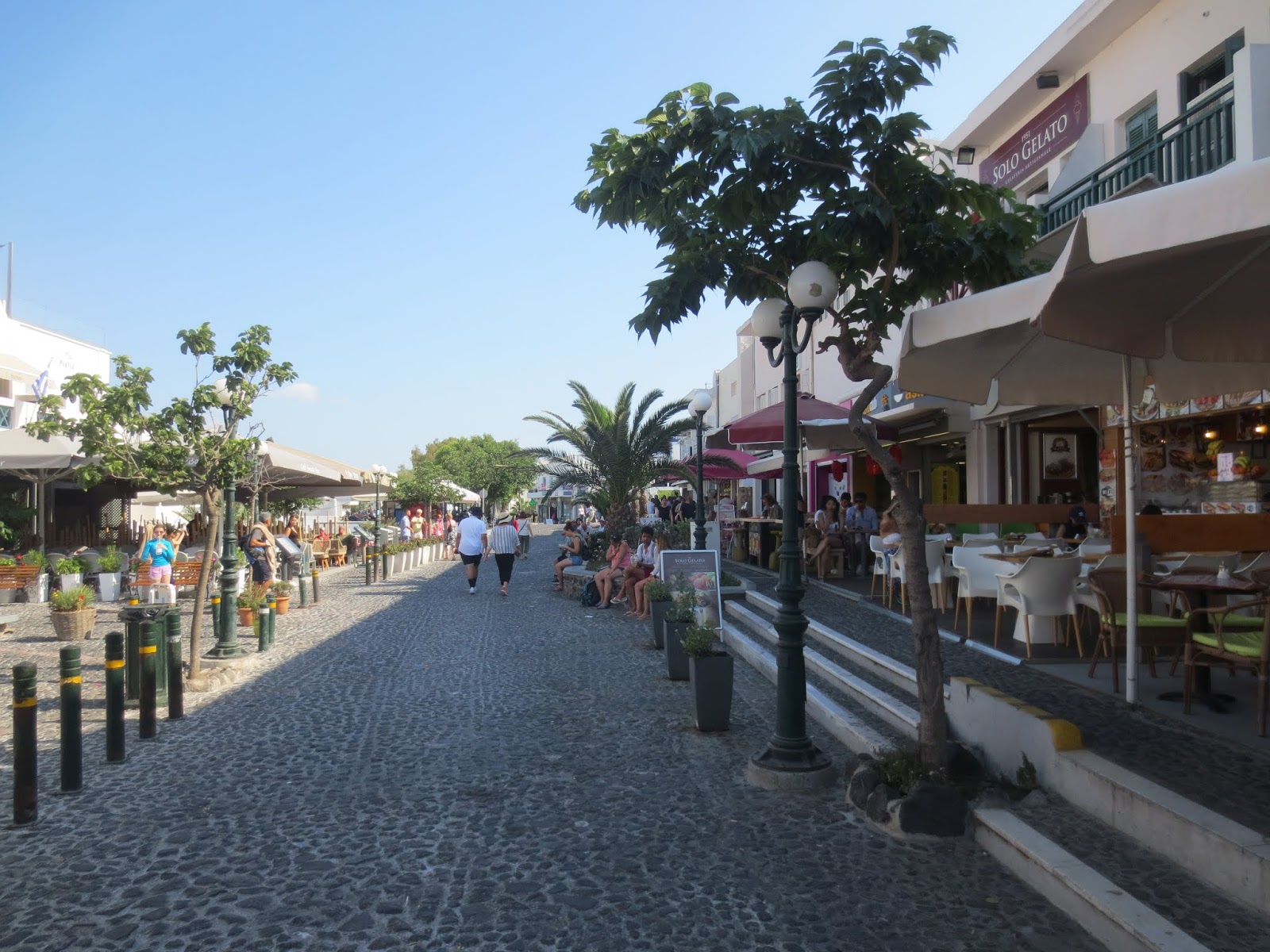
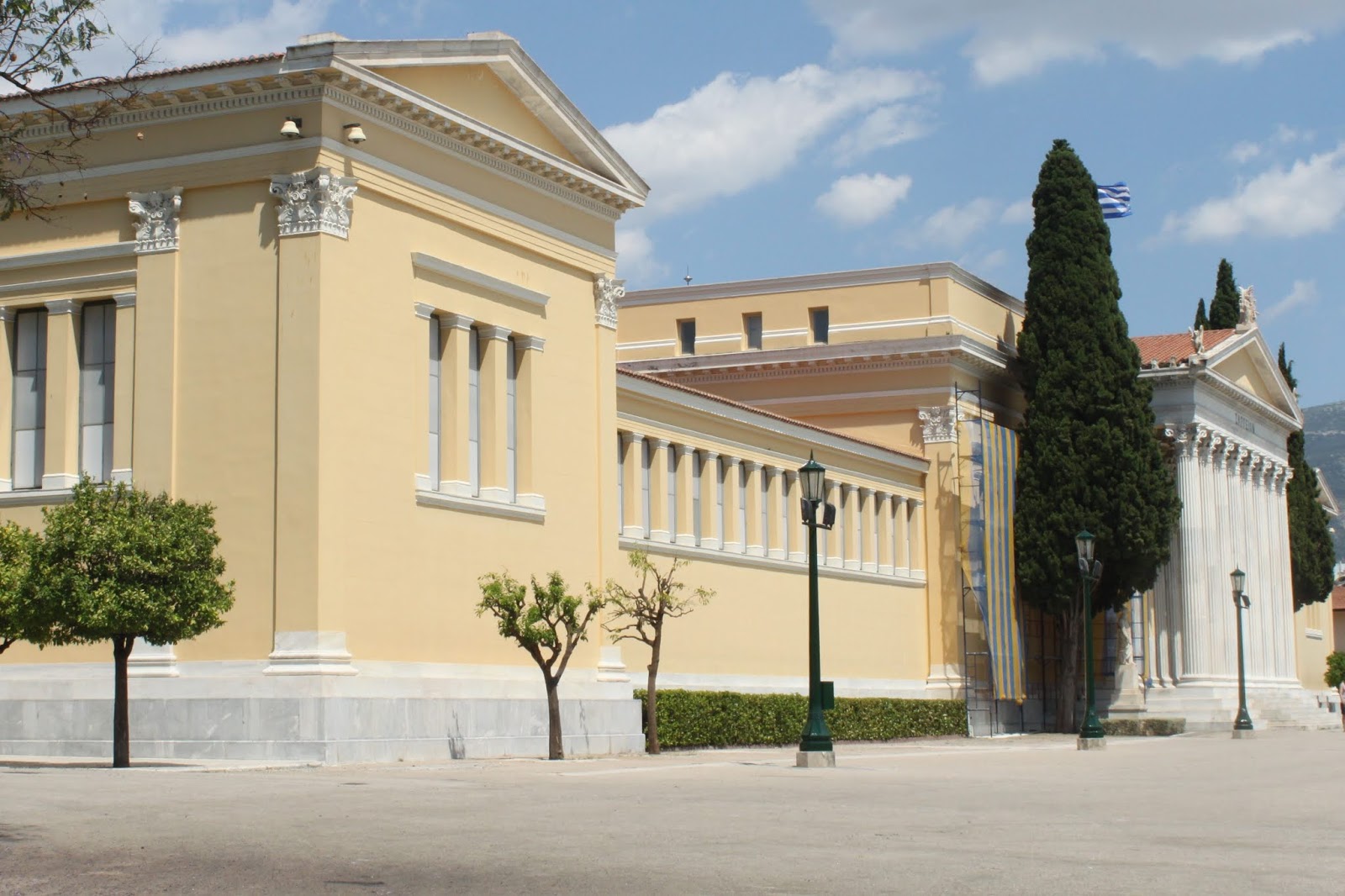
In June 2019, I spent a week in Greece with my wife and 4 year old son. We spent 4 days in Athens, and they were very memorable days, because we were amazed at how history came alive in this fascinating city. I had spent several days in Athens as a small child way back in 1977, and I had very fuzzy memories, so it was like visiting for the first time. My mother constantly tells me that back then, the only thing I had to say about Athens was my utter horror that there were so many broken buildings around that nobody had bothered to repair - that was my expert commentary on the Acropolis as a 4 year old!
For a major part of our visit, we stayed at an Airbnb apartment called AS Acropolis Design Apartment. It was small, but neat and cozy, and very conveniently located near a vibrant restaurant hub, a couple of supermarkets, and the Sygrou Fix metro station. We got ourselves 3 day travel cards, which allowed us unlimited travel by metro and bus. Athens has three metro lines and they cover most of the places of interest, so commuting within the city is easy, and we didn't have to spend money on taxis even once. The weather was really hot, so that impacted how much we could walk around during the day, but days were long, as it got dark only after 9 pm, and walking around after 7 pm was an absolute joy. We tried to do indoors stuff like museums when the sun was at its scorching worst!
Athens is the capital of Greece, and
has a population of over 660,000 (as of 2011), though Greater Athens has more
than 3 million inhabitants. It is one of the oldest cities of the world, with
recorded history going back to at least 1500 BC. It is referred to as the
cradle of western civilization and the birthplace of democracy.
The oldest traces of human presence
in the region go back to 11000 BC. By 1400 BC, Athens was an important centre
of the Mycenaean civilization. By 900 BC, Athens was a major trading centre. By
the 6th century BC, democracy took birth in
the city. Athens was involved in the coalition of Greek states that defeated
the Persians at Marathon in 490 BC and at Salamis in 480 BC. In the subsequent
decades, Athens became a leading cultural centre, and had famous playwrights,
historians and philosophers. Pericles was instrumental in the building of the
Acropolis. In the 4th century BC, the Greek kingdom of Macedon took over the city. The Romans later
gave it the status of a free city, and in the 2nd century AD, the Roman Emperor Hadrian constructed several
of the city’s important landmarks, including the Temple of the Olympian Zeus.
In 1458, the Ottomans took over the
city and it went into decline. The Greek State was formed in 1834, with Athens
as its capital, following the Greek War of Independence (where Greece was
helped by the Russian Empire, Great Britain and the Kingdom of France). At that
time, the city was down to having just 4,000 inhabitants. The first king of
Greece, Otto of Bavaria, designed a modern city befitting its new status. In
1896, the first modern Olympic Games were held in Athens. In the 1990’s, the
city’s infrastructure was greatly improved, with the setting up of Athens
International Airport, and major expansion of the Athens Metro. In 2004, Athens
hosted the Olympic Games for a second time.
Today, Athens is a bustling, modern
city, with one of Europe’s largest ports (in the suburb of Piraeus), and it is
a large financial and economic centre. Yet, the city’s charm and attraction lie
largely in the ancient landmarks that are scattered across it, with structures
like the Acropolis and Ancient Agora. The region’s rich art legacy from a
bygone era can be admired in the city’s various museums, most prominent among
which is the very impressive National Archaeological Museum.
The
Acropolis dates back to the 5th century BC. Perikles was responsible for
the construction of the Acropolis, on a hill rising above the city. The
Acropolis is visible from all over the city, given the height of the hill on
which it stands. The complex lies largely in ruins, but the structures are
intact enough to tell us the stories of their former grandeur.
The complex consists of numerous structures, including the
Parthenon, the Temple of Athena Nike, the Erechteion,
the Theatre of Herodes Atticus and the
Theatre of Dionysos. The Parthenon is one of the
world’s best known structures. It was built to house the 12 meter tall status
of the goddess Athena. The statue is no longer there, but a smaller replica can
be found in the National Archaeological Museum. The Erechteion had the famous
sculptures of the Caryatids, most of which can be seen at the Acropolis Museum.
Replicas of the originals can be seen on display at the Erechteion. Outdoor concerts are held at the Theatre of Herodes Atticus even today.
 |
| Parthenon |
 |
| Erechteion |
 |
| Temple of Athena Nike |
 |
| Theatre of Dionysos |
 |
| Theatre of Herodes Atticus |
The Acropolis
Museum opened in 2008, and
lies very close to the base of the Acropolis slopes. There was previously an
old Acropolis Museum, close to the Parthenon,
but that was considered too small. The museum has finds from the slopes of the
Acropolis.
The Parthenon Gallery on the top floor has the original parts
of the Parthenon frieze. The Parthenon procession is depicted. One of the
museum’s main highlights is the statue of five of the six Caryatids from the Erechteion, the sixth being in
London’s British Museum.
 |
| Caryatids |
 |
| Parthenon Frieze showing Horsemen |
 |
| Mask of Dionysos |
Ancient Agora was the marketplace of ancient Athens, and it was also the
political heart of the city. The complex had the council, the law courts, the
city mint, shops, schools and theatres. Socrates was executed here in 399
BC. In the 1930’s, massive excavations
were done, and many old structures were revealed.
Hephaisteion is
a temple that was built between 449 and 440 BC. It is the best preserves
structure in the complex, and is situated on a small hill. The Stoa of Attalos at the Ancient Agora complex was reconstructed in the 1950’s
with donations from John D Rockefeller Jr. The two storeyed roofed arcade was
built by King Attalos of Pergamon and was burned down
in 267 AD. The reconstructed building now houses a museum, featuring many
sculptures and other artefacts from that era.
 |
| Hephaisteion |
 |
| Statue of Hadrian |
 |
| Stoa of Attalos |
 |
| Corridor, Stoa of Attalos |
 |
Bust of Emperor Antonious Pius,
Stoa of Attalos |
 |
Winged Victory (4th century BC),
Stoa of Attalos |
Mitropoli is
the cathedral of Athens. It was inaugurated in 1862 by the king and queen. It
has been used for ceremonial events like coronations of kings, as well as for
weddings and funerals.
 |
| Mitropoli |
 |
| Interior, Mitropoli |
Panagia Gorgoepikoos is a church that dates back to the 12th century. The tiny church is just 7.5 meters long and 12 meters wide. It is also
called Mikri Mitropoli, or Little
Cathedral, and is located just next to Mitropoli.
 |
| Panagia Gorgoepikoos |
 |
| Interior, Panagia Gorgoepikoos |
Kapnikarea is a small 11th century Byzantine church. It was saved from
demolition in 1834 thanks to the intervention of King Ludwig of Bavaria.
 |
| Kapnikarea |
 |
| Mosaic, Kapnikarea |
Temple of Olympian Zeus dates back to the 6th century BC. Work was
started by Peisistratos, but it was
completed 650 years later. Emperor Hadrian dedicated the temple to Zeus Olympios in 132 AD. He set up
a gold and ivory statue of Zeus, and another on of himself. Both statues have
since been lost. The temple now lies in ruins, and only 15 of the original 104
Corinthian columns remain (each one is 17 meters high).
 |
| Temple of Olympian Zeus |
Hadrian’s Arch lies next to the Temple of Olympian Zeus. It was built in 131
AD. It marked the boundary between the ancient city and the Athens of Emperor
Hadrian.
 |
| Hadrian's Arch |
National Archaeological Museum opened in 1891. It brought together priceless, antique
works of art that had previously been kept at different places across Athens.
During World War II, the collection was buried underground to prevent it from
being damaged. The museum reopened in 1946. It is one of the world’s finest
museums, and has archaeological finds dating back to around 6000 BC. Its most
impressive collection, however, is possibly the fantastic collection of
classical Greek marble and bronze sculptures, though it also has a fine
collection of Neolithic and Cycladic art, frescoes, pottery, jewellery and
funerary objects.
 |
| Zeus or Poseidon (460 BC) |
 |
| Horse and a Young Jockey (160 BC) |
 |
| Statuette of Athena (3rd century AD) |
 |
| Statue of a Kouros (540 to 530 BC) |
 |
| Mask of Agamemnon (1600 BC) |
 |
| Gold Diadem |
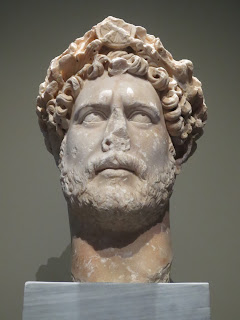 |
| Colossal Head of Emperor Hadrian (130 to 140 AD) |
 |
| Grace Stele (5th century AD) |
 |
| Monumental Amphora (760 to 750 BC) |
 |
| Spring Fresco from Akrotiri |
Benaki
Museum was founded in 1931
by Antonis Benaki (1873 – 1954). He
was the son of a wealthy Greek man who made his fortune in Egypt. The museum is
in a mansion where the family once lived. The museum has a great collection of
Greek art, jewellery, pottery, costumes, and finds from the Neolithic era.
 |
| Bowl with a Dancing Girl (14th century AD) |
 |
| Male Funeral Portrait on Linen (3rd century AD) |
 |
| Grave Stele (4th century BC) |
Museum of Cycladic Art opened in 1986 and has an impressive collection of Cycladic
art, some of which dates back to around 3000 BC. Different floors are dedicated
to different sections – there’s Cycladic art, there’s ancient Greek art,
there’s ancient Cypriot art and there’s a section on daily life in antiquity.
The museum also hosts temporary exhibitions, featuring artists like Pablo
Picasso, who was greatly influenced by Cycladic art.
 |
| Bronze Askos (1st century AD) |
 |
| Female Figurine |
 |
| Female Figurines (1750 to 1600 BC) |
Syntagma
Square is a large city
square in the heart of Athens. The Greek Parliament lies at the eastern end of
the square, and in front of it lies the Tomb of the Unknown Soldier, showing a dying Greek warrior. The National Guard are
on continuous patrol outside the tomb, and the changing of the guard is an
activity that is very popular with visitors.
 |
| Greek Parliament |
 |
| Tomb of the Unknown Soldier |
Monastiraki is
a lively area in central Athens with restaurants, stalls and a flea bazaar. The
area has strong Roman and Ottoman influences visible. The area got its name
from Pantanassa Church, which
belonged to a monastery that gave the area
its name.
 |
| Tzistarakis Mosque, Monastiraki |
 |
| Pantanassa Church, Monastiraki |
 |
| Souvenir Bags, Monastiraki |
Right next to Monastiraki and starting at Mitropoli, lies another lively area known as
Plaka. It is full of shops, souvenir stores and restaurants.
 |
| Plaka |
The National
Gardens lies south of the
Greek Parliament. The gardens cover an area of 40 acres. They are a serene,
green space in the heart of the city, and are full of walking paths, different
varieties of trees, ponds and park benches. One of the prominent landmarks of
the National Gardens is the grand looking Zappeion
exhibition hall, used largely as a conference hall.
 |
| National Gardens |
 |
| Zappeion, National Gardens |
Tower
of the Winds dates back to the 1st century BC. It is an octagonal structure that was built as a water clock and
weather vane. It was built by the astronomer Andronikos Kyrrestes.
 |
| Tower of the Winds |
From the port of Piraeus, many ferries go to the Greek islands. We went on Tera Jet to Santorini. It was a 5 hour ferry ride in absolute comfort, with a beautiful view of the Aegean Sea. The enormous ferry could house 2,000 people and 500 cars!
 |
| Tera Jet |
Greek cuisines are very popular, and some of the best known
items that are a part of traditional Greek cuisines include Gyros (thin slices
of meat served with pita bread), Souvlaki
(chunks of meat grilled on a skewer, often eaten inside a pita bread), Moussaka (a type of lasagna with meat and egg
plant), Pastitsio (a type of meat lasagna) and Greek salads
(which contain lots of greens and a local type of cottage cheese).
 |
| Chicken Souvlaki |
 |
| Meat Platter |
We absolutely loved our time in Athens. Hard to match up to the city when it comes to its history, and its ancient structures and artefacts. The city has its really vibrant and lively areas, in places like Monastiraki and Plaka. Food options are huge, and we fell in love with Greek food. For shopping, eating, commuting and accommodation, prices were largely less than they are in a lot of places in western Europe. People were friendly and helpful, and what an attractive looking race they are! The weather was hot, but despite that, we enjoyed the city more than we have enjoyed most other cities!