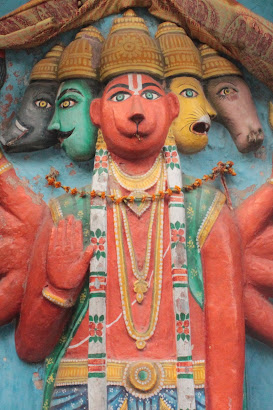
Friday, August 28, 2020

My Visual Travel Experience: Varanasi

I have visited Varanasi on several occasions, on work, and to explore the city. My most recent trip was in 2010. I have been fascinated by the magnetic pull of the Kashi Vishwanath Temple, and the Ghats along the banks of the River Ganga. People are drawn here by the millions, and the city is one of India's most popular pilgrimage sites. The narrow by-lanes in the heart of the city, where there is no scope for vehicles to go, have left me amazed. I have enjoyed going on boat rides along the River Ganga, admiring the temples and grand structures along the Ghats.

Varanasi also holds a special place in my heart, because it was here that my father proposed to my mother, at Clarks Hotel, way back in December 1964. She said yes, and they got married a week later and left for New York, where my father was posted back then.

Varanasi, also known as Benaras or Kashi, is situated in the eastern part of Uttar Pradesh, India’s most populous state. It has a population of over 1.2 million. The city lies along the banks of the River Ganga, and is one of India’s holiest cities. Buddha is supposed to have founded Buddhism here in 528 AD, when he preached in Sarnath, just outside the city. The Mughal Emperor Akbar patronised the city and built two large temples here. A lot of the current city dates back to the 18th century, to the period of the Marathas and the Brumihar Brahmin kings.


Hindus believe that dying here and being cremated along the banks of the River Ganga allows one to attain salvation and break free from the cycle of rebirth. The city is best known for its Ghats along the river, and two of the Ghats are used for cremation. Varanasi has over 23,000 temples, and the most famous one is the Kashi Vishwanath Temple. The city is also a big cultural hub, and several prominent writers, poets, musicians and philosophers have come from it. It also has the famous Benaras Hindu University, one of Asia’s largest residential universities.


The Ghats are riverside steps leading down to the River Ganga. Varanasi has 88 Ghats. Most are for bathing and prayer ceremonies, and two are for cremations. A majority of the Ghats date back to the 18th century, and were made under the Marathas. Prayag Ghat is one of the city's most prominent Ghats.

Prayag Ghat

Linga, Prayag Ghat

Nandi Statue, Prayag Ghat

Dashashwamedh Ghat is another one of the best known Ghats. It lies close to the Kashi Vishwanath Temple. Every evening, the Ghat sees an “Agni Pooja” dedicated to Lord Shiva, the River Ganga, the Sun God Surya, the Fire God Agni, and the whole universe. A lot of believers find this to be an extremely spiritual experience.

Dashashwamedh Ghat

Deity at Dashashwamedh Ghat

There are many other Ghats in Varanasi, including Darbhanga Ghat, Digpatiya Ghat, Manikarnika Ghat (where cremations take place) and Nepali Ghat.

Darbhanga Ghat

Digpatiya Ghat

Manikarnika Ghat

Nepali Ghat

Kashi Vishwanath Temple lies not far off from the Ghats. It is dedicated to Lord Shiva. It is one of the 12 Jyotirlingas, the holiest of Shiva temples. The temple was destroyed several times in its history, most recently by Emperor Aurangzeb in 1669. The present temple dates back to 1780, when it was built by Maharani Ahilyabai Holkar.  The temple went through several rounds of expansion subsequently. In 1835, Maharaja Ranjit Singh donated 1 ton of gold to plate the temple’s dome.

Kashi Vishwanath Temple
Image From Public Domain

Durga Mandir is dedicated to Goddess Durga. It dates back to the 18th century and was built by Rani Bhabani of Natore.
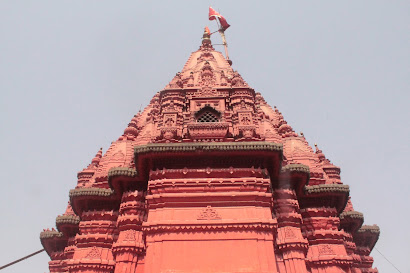
Durga Mandir

Shri Vishwanath Temple is situated inside Benaras Hindu University. The temple was built by the Birla family and was completed in 1966. The temple’s tower is 77 meters high, and is made largely of marble.

Shri Vishwanath Temple

Bharat Kala Bhawan is a museum inside the Benaras Hindu University campus. The museum moved to its present location in 1962. The artefacts on display include Buddhist and Hindu sculptures, paintings, Miniature paintings from the Mughal era, textiles, pottery, jewellery and ivory items.

Alice Boner's Creation, Bharat Kala Bhawan

Dancing Ganesha, Bharat Kala Bhavan

Shiva and Parvati, Bharat Kala Bhawan
Varanasi is certainly a fascinating city. It has that unique spiritual energy that is very uplifting. I was sad to see that the Ghats were not kept clean, and hygiene was a real concern. That really took away from what would have otherwise been an amazing experience. However, from what I've heard, in recent years, there have been huge efforts to clean up the Ghats and the River Ganga. With these enhanced steps, Varanasi is undoubtedly a place not to be missed by pilgrims, by travelers interested in temple architecture, and by visitors who are interested in Hinduism and the spiritual side of India.

Monday, July 13, 2020

My Visual Travel Experience: Napa, California

My wife and I spent a month in the western part of the USA in 2011 after our marriage. We spent time in Hawaii, San Francisco, Carmel, Napa, Fresno, Yosemite National Park, Las Vegas and Grand Canyon. We rented a car and drove to Napa, which lies about 80 km north of San Francisco. We enjoyed our tours of some of Napa's plush wineries. We got to taste many varieties of wine. Though we are not wine aficionados, we still had a great time tasting the delicious wines. The wineries were also beautiful and well worth seeing.

The town of Napa is situated in the American state of California. The town has a population of a little over 75,000 and is the second largest town in California’s wine growing region after Santa Rosa. Napa was incorporated as a city in 1872.

The first exploration of the area dates back to 1823. It was led by Padre Jose Altimira, the founder of Mission San Francisco Solano. The region was inhabited by Native American Indians back then. Many were converted to Christianity. Most others were driven out. In 1850, tensions between white settlers and Native American Indians resulted in many of the latter being killed. By 1870, the population consisted largely of white settlers.

Napa grew significantly in the California Gold Rush of the late 1850s. Agriculture and wine making became popular towards the turn of the century. Industries, commercial activities and the retail sector also expanded. Napa also developed one of the largest red light districts for a town of its size. Premium wine growing became popular in the 1960s, and today the region around Napa, known as Napa Valley, produces some of the world’s most premium varieties of wine.
Signage at the entrance to Napa Valley
Castle Winery, formally known as Castello di Amorosa, is a castle and winery. It opened in 2007. It was the brainchild of Dario Sattui, a 4th generation winemaker. The winery is on 171 acres of land. The castle has 107 rooms over 8 floors. The castle has a moat, a drawbridge, a courtyard, a torture chamber, a chapel, a knights’ chamber and a great hall.  Castle Winery produces 16,000 cases per year. Tours are allowed, as is wine tasting. 
Castle, Castle Winery
Chapel Interior, Castle Winery
Knights' Hall, Castle Winery
Vineyards, Castle Winery
The Entrance Gate, Castle Winery
Sterling Vineyards are spread over 1,200 acres of land. They produce 400,000 cases per annum. Visitors have to take cable cars from the entrance to the main villa and distillery. The white plastered villa looks like buildings in Mykonos, Greece. Production began in 1969.
Villa, Sterling Vineyards
View from the Terrace, Sterling Vineyards
Barrel, Sterling Vineyards
Hagafen Cellars is a winery that opened in 1979. It is California’s first kosher winery.  The winery makes 8,000 cases per annum. Hagafen specializes in Cabernet Sauvignon. Hagafen wines  cater to the top end of the market, and they have been served at the White House on many occasions.  
Overview, Hagafen Cellars
Barrel, Hagafen Cellars
Wine Tasting Room, Hagafen Cellars
Vineyards, Hagafen Cellars
First Presbytarian Church was built in 1874 in Neo Gothic style. It has an imposing steeple. The church was damaged in a 2014 earthquake, but was subsequently restored.
First Presbytarian Church
Interior, First Presbytarian Church
Napa was a charming place. The beautiful vineyards, the wine tasting experience, and the magnificent Medieval Europe inspired castle of Castle Winery were the highlights for me. My wife and I are both fans of dessert wine, and we got to taste some delicious dessert wine there. We have now managed to go to several wine growing areas in the world - Napa Valley in California, Duoro Valley in Portugal, and Yarra Valley in Melbourne. The area around Bordeux in France is still pending, as is the area around Nashik in India. All in all, it was a great outing from San Francisco!

Thursday, July 2, 2020

My Visual Travel Experience: Cambridge, England

I have close associations with the city of Cambridge. My father spent a year in Cambridge in the mid 1950s learning Japanese at St John's College. It was a part of his language training after he joined the Indian Foreign Service. He was subsequently posted to Tokyo. My wife spent a year in St Edmund's College in the late 1990s and she did her M Phil in Development Studies there. A very close family friend of ours has spent several decades as a History Professor at Trinity College.

I have had the chance of visiting Cambridge twice, once in 1987 with my parents and sisters, and once in 2006 on a solo trip. Both have been rushed visits of a day each, but I have managed to explore the beautiful city, and seen some of its spectacular colleges, and a few of its pretty churches.

The university town of Cambridge lies in the English county of Cambridgeshire, 90 km north of London. The city lies along the River Cam. It has a population of about 125,000. Along with Oxford, Cambridge is one of the world’s best known university towns.

The city was an important trading centre during the Roman ages. There is a Roman fort that was built around 70 AD. The Romans withdrew from Britain around 410 AD. The Anglo Saxons began occupying the area shortly afterwards. Viking rule was established in 878 AD. Cambridge became a vital trading town and grew rapidly. After the Vikings, the Saxons came to power.

William of Normandy came to power in 1066. Cambridge came under the king’s control. The University of Cambridge was established in 1209. In 1349, the Black Death struck, and a lot of the town’s population perished. There were more deaths in the second epidemic in 1361. Work on King’s College Chapel was started by King Henry VI in 1446. Construction was completed in 1515, under the reign of King Henry VIII. The building is the town’s best known landmark.

Cambridge saw further development in the industrial era in the 19th century. Today Cambridge’s economy is supported by education, research and development, software consultancy and tourism. The city has two universities, the University of Cambridge, and the Anglia Ruskin University. The city caters to around 30,000 university students.

King’s College was founded by Henry VI in 1441. King’s College Chapel was completed by Henry VII in 1544 and is an example of Gothic English architecture. The chapel is famous for its fan vault, its stain glass windows, its wooden chancel screen and its choir. The chapel also has Peter Paul Rubens’ masterpiece, Adoration of the Magi, which was a gift from the property millionaire, Alfred E. Allnatt, in 1961.
 Chapel, King's College
Gateway, King's College
Statue of Henry VIII, King's College
Courtyard, King's College
Rubens' Adoration of the Magi,
Chapel, King's College
Public Domain; Courtesy: Google Arts
St John’s College was established in 1511. The college’s list of alumni includes multiple Nobel laureates, prime ministers, archbishops and royalty. The college’s landmarks include the Great Gate, the First Court, the Second Court, the Third Court,  New Court, the Dining Hall, the Library, the Bridge of Sighs and the Chapel. The chapel was completed in 1869 and replaced an old 13th century chapel. The chapel’s tower is 50 meters high.
Chapel, St John's College
Bridge of Sighs, St John's College
Second Court, St John's College
New Court, St John's College
Queens’ College was founded in 1448 by Margaret of Anjou, the wife of Henry VI. The Mathematical Bridge connects the two sides of the college.  The buildings of the college include Cloister Court, Old Court, Walnut Tree Court, Friar’s Court, and Cripps Court.
Mathematical Bridge, Queens' College
Sun Dial, Queens' College
Church of St Mary the Great was built between 1478 and 1519, and the tower was built in 1609. The church was financed by Richard III and Henry VII. It has been restored several times since then. The Protestant reformer, Martin Bucer, was buried here. The famous physicist, Stephen Hawking, had his funeral here too. The church has the University Organ and the University Clock. Visitors can climb up the tower for great views of the city.
Church of St Mary the Great
University Clock,
Church of St Mary the Great
Market Place,
View from the top of Church of St Mary the Great
Round Church dates back to around 1130. Its official name is Church of the Holy Sepulchre. The small medieval church is built in stone, and it has a circular nave. The church was in great disrepair and was renovated in the 19th century.
Round Church
Cambridge is lovely. I would rank it among the most beautiful towns I have been to. Besides the University of Cambridge, the other university campuses that I have found absolutely stunning have been the ones at the University of Oxford, the University of Stanford in Palo Alto and the University of Harvard in Boston. For me, highlights of Cambridge are the architecture of the colleges, the splendidly manicured lawns, and the youthful and vibrant college atmosphere. It would take a lot more time to go into depth and see more of the beautiful college buildings, but in my limited time, I did manage to cover some of the main ones.

Sunday, June 28, 2020

My Visual Travel Experience: Sultanpur National Park, Haryana, India

I visited Sultanpur National Park with my wife, my son, my son's two close friends, and the boys' respective fathers, towards the end of the winter season in 2019. We went armed with SLR cameras and binoculars, and we saw many birds, we spotted several animals, we had a nice little picnic, the three little boys ran around and played, and overall it was a very enjoyable morning! Given its proximity to Delhi, and more so to Gurgaon, I am surprised I had not visited earlier.

Sultanpur National Park is situated in the northern Indian state of Haryana, barely 50 km from the national capital Delhi. The park is just 15 km from Gurgaon. It has an area of 1.4 sq km. In 1970, the noted British ornithologist, Peter Michael Jackson, wrote to the then Prime Minister of India, Indira Gandhi, with a request to convert Sultanpur Lake into a bird sanctuary. The area was declared a bird sanctuary in 1972. In 1989, it was upgraded and re-designated a national park. 
The Lake at Sultanpur National Park
There are over 10,000 species of birds in the world. About 370 migrate to India every year, due to seasonal changes and in search of food. About 250 species of birds have been found in Sultanpur National Park. Though some of them are resident birds, many of them are migratory birds that come from far off places.
Birds in the Lake
A Cormorant up on a Tree
Ducks in the Lake
Resident birds in Sultanpur National Park include cormorants, francolins, kingfishers, storks, ibises, egrets, larks, parakeets, doves, pigeons, and ducks. Migratory birds include Siberian cranes, flamingos, pelicans, herons, and cuckoos. In addition to birds, the park also has several species of animals, including blue bulls (also called nilgais), black bucks, and foxes. Cattle also roam around freely in the park.
A Nilgai inside the Lake
A Crane and Nilgai
A Bull at the side of the Lake
Sultanpur National Park is a popular picnic spot, especially during winter months which are pleasant and when thousands of migratory birds visit the park. The park has several watch towers, an education and interpretation centre, a library, a children’s park, and even a guest-house for those wanting to stay overnight. A walk around the park can take about 2 hours. Buggy rides are also available at reasonable prices for those who are not comfortable walking.
The Pathway running across the Park
A Watch Tower inside the Park
Buggies
For people living in Delhi and the National Capital Region looking for a quick get-away from the concrete jungle that the megapolis is, Sultanpur National Park is a serene place, and makes for a lovely half day outing. The best time to go is certainly in or around the winter months, because that's when you will get to see the thousands of migratory birds that come, and that's the only time of year when you'll be able to walk around the park comfortably because of the pleasant weather.