Saturday, August 25, 2018

My Visual Travel Experience: Shenzhen

In 2015, we visited my sister in law in Macau, and it was almost a month long trip. She had just moved there with her husband and two kids. I spent some time in Macau and then having safely deposited my wife and little son at my sister in law's place, I traveled by myself a little in that part of the world. One of my trips was to the nearby Chinese city of Shenzhen, where I spent 3 days.

Shenzhen has a population of over 10.3 million and is one of China’s largest and most modern cities. Till the 1970's, Shenzhen was just a small town, with a population of no more than 30,000. Given its close proximity to Hong Kong, in 1979 it was given Special Economic Zone status by the Chinese leader, Deng Xiaoping, and that saw rapid investments, both foreign and local. What followed was a population boom and enormous economic prosperity. This special status was given to Shenzhen as China experimented with market capitalism. Today Shenzhen is one of the world’s biggest manufacturing hubs. The city has been developed for tourism too. It's amazing to see the transformation of this little town into a bustling metropolis in a span of just over 2 decades.

Window of the World is a theme park that has replicas of some of the world’s best known landmarks, and statues. Landmarks from Europe, North America, South America, Asia, Africa and Australia are represented. The largest structure in the theme park is the 108 meter tall Eiffel Tower, which acts like an anchor point in the vast theme park. An elevator takes visitors up the Eiffel Tower, for a great view of the park’s attractions.
Paris' Eiffel Tower, Window of the World
Cologne Cathedral, Window of the World
Florence's Palazzo Signoria, Window of the World
Moscow's Red Square, Window of the World
London's Houses of Parliament, Window of the World
Rodin's Thinker, Window of the World
Splendid China and China Folk Culture Village is a theme park that lies close to Window of the World. Splendid China has miniature replicas of some of China’s best known landmarks, like the Great Wall of China and the Summer Palace. Most attractions are in the scale of 1:15. China Folk Culture Village has several Chinese cultural programs at different venues (the Peking Opera show, the Tibetan cultural show, the Uighur dance…) and it also has a fascinating Horse Fighting Show taking visitors back to the medieval ages and the days of Genghis Khan!
Great Wall of China, Splendid China
Beijing's Temple of Heaven, Splendid China
Leshan Giant Buddha, Splendid China
Nine Dragon Screen Wall, Splendid China
Horse Fighting Show, China Folk Culture Village
Donkey Ride, China Folk Culture Village
Minsk World is a military theme park. It consists of a large decommissioned Soviet aircraft carrier, with torpedoes, military aircraft and military helicopters. The theme park opened in 2000 and is a popular attraction in Shenzhen.
Minsk Aircraft Carrier
Helicopter, Minsk Aircraft Carrier
Aircraft, Minsk Aircraft Carrier
Dafen Village is famous for its replicas of oil paintings by masters such as Leonardo Da Vinci and Van Gogh. In the early 1990's, about 20 artists established themselves in this village and started this practice. The project was a success and more and more artists set up shop. The village currently sells both originals as well as replicas, but it is best known for its low priced replicas. The Dafen Art Museum also lies in Dafen Village and it showcases original works by local artists.
Replicas of works of art, Dafen Village
Musicians, Dafen Art Museum
Shenzhen Museum (New) is located at one side of the Civic Center. The Grand Hall has a statue of Deng Xiaoping standing in front of a car, viewing a large map of Shenzhen. The leader was responsible for giving Shenzhen its Special Economic Status in 1979, that led to its boom. The museum – which is spread over 3 floors - has exhibits on Shenzhen’s history and culture (depicted through wax figures of citizens). There is also a large natural history section featuring animals from all over the world.
Great Hall, Shenzhen Museum (New)
Photograph of Deng Xiaoping, Shenzhen Museum (New)
Lantern Dance, Shenzhen Museum (New)
Basket Maker, Shenzhen Museum (New)
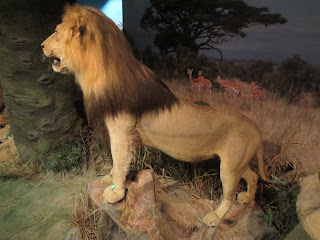
Lion, Shenzhen Museum (New)
Shenzhen Museum (Old) has 13 galleries spread over 4 floors. Exhibits include animals, traditional Chinese fans, Chinese calligraphy, stone sculptures, metal objects and porcelain sculptures.
Buddha Head, Shenzhen Museum (Old)
Tricolour Camel, Shenzhen Museum (Old)
Fan, Shenzhen Museum (Old)
Vulture, Shenzhen Museum (Old)
The Deng Xiaoping Statue at the summit of the Lianhua Mountain Park is a 6 meter high bronze memorial to the leader responsible for developing Shenzhen as a Special Economic Zone. 
Deng Xiaoping Statue
KK100 is a large skyscraper with 100 floors and rises to a height of 441 meters. The building houses offices, a luxury hotel, a garden and several restaurants. At the base of the building lies KK Mall, a large shopping complex, with luxury brand stores and restaurants. When it was completed in 2011, KK 100 was the 8th tallest building in the world.
KK100
Litchi Garden, a pretty garden with a lake, a bridge, and numerous litchi trees, is a beautiful green expanse in the heart of Shenzhen.
Litchi Garden
Luohu Port is the entry point into Hong Kong from Shenzhen. The complex houses the Shenzhen Railway Station, the bus stand and a major shopping complex.
Luohu Port
So I left Shenzhen totally impressed with what has happened in this metropolis is such a short period of time. Being so close to Hong Hong, I certainly feel visitors to Hong Kong can take a few days off and see Shenzhen to see what the modern China is all about. Tough not to be impressed!

Sunday, August 19, 2018

My Visual Travel Experience: Hyderabad

Between 2000 and 2010, during my marketing stints in Britannia and then Nokia, I spent a cumulative of about 2 weeks in Hyderabad. I used to go there on market visits or consumer insight trips every couple of years. Whenever I could, I used to try and club my visit with a weekend so that I could explore this historical city, and spend time with my father's younger brother and his wife, who were settled there. In 2011, I set up my own travel souvenir company. Subsequently I visited Hyderabad to tie up with the airport there to sell my souvenirs. I also went on a couple of sad occasions, when my cousin and later my aunt passed away. So I've spent a total of around 3 weeks in Hyderabad and have got a chance to see the city quite well.

Hyderabad is a city with a population of 6.7 million (2011 census) and is the capital of the state of Telangana. Muhammad Quli Qutb Shah, the fifth sultan of the Qutb Shahi Dynasty, established the city in 1591. The Qutb Shahi Dynasty ruled for close to a century, before the Mughals took over in 1686. In 1724, Asaf Jah I was appointed the Viceroy of the Deccan by the Mughal Emperor. He created his own dynasty, known as the Nizams of Hyderabad. Hyderabad was a princely state in the British period, and it was the wealthiest of all the princely states. Hyderabad became a part of the Indian Union in 1948, though reluctantly, and it became the capital of the state of Andhra Pradesh in 1956. In 2014, Andhra Pradesh was split into two states, and Telangana was formed, with Hyderabad as its capital. Hyderabad will also temporarily be the capital of Andhra Pradesh till 2025.

Charminar is a monument that was built in 1591 by the fifth ruler of the Qutb Shahi Dynasty, Sultan Muhammad Quli Qutb Shah, after he shifted his capital from Golconda to Hyderabad. It literally means “Four Minarets”. Charminar is in the middle of a busy intersection in the heart of the old town. The Laad Bazaar lies on one side, and the Mecca Masjid lies on another side.
Charminar
Golconda Fort is a fort on the outskirts of Hyderabad. It was the capital of the Qutb Shahi Dynasty of sultans in the 16th century, until the capital shifted to Hyderabad in 1590. After 1686, the fort fell into ruin, after an 8 month siege by the Mughal Emperor Aurangzeb. The Golconda region is famous for having produced some of the world’s biggest diamonds, including the Kohinoor. In the evenings, Golconda Fort has a sound and light show, where visitors are taken through the history of the fort.
Bala Hissar Gateway, Golconda Fort
Clapping Portico seen from Baradari, Golconda Fort
Baradari, Golconda Fort
Clapping Portico, Golconda Fort
Nakkar Khana, Golconda Fort
Qutb Shahi Tombs lie close to Golconda Fort and contain the tombs of the kings of the Qutb Shahi Dynasty. As per custom, the tombs were ordinarily built by the sultans during their lifetime. The rulers of the Qutb Shahi Dynasty were: 
1.Sultan Quli Qutb Mulk (1512-1543) 
2.Sultan Jamsheed Quli Qutb Shah (1543-1550) 
3.Sultan Subhan Quli Qutb Shah (1550) 
4.Sultan Ibrahim Quli Qutb Shah (1550-1580) 
5.Sultan Mohammad Quli Qutb Shah (1580-1611) 
6.Sultan Mohammad Qutb Shah (1611-1626) 
7.Sultan Abdullah Qutb Shah (1626-1672) 
8.Sultan Abul Hasan Qutb Shah (1672-1686).
Great Mosque, Qutb Quli Tombs
Tomb of Sultan Jamsheed Quli Qutb Shah (the 2nd sultan,
who assassinated his father), Qutb Quli Tombs
Tomb of Sultan Mohammad Quli Qutb Shah (the 5th sultan,
who was the founder of Hyderabad), Qutb Quli Tombs
Tomb of Hayat Baksh Begum (wife of the 5th sultan),
Qutb Quli Tombs

Tomb of Kulsum Begum,
Qutb Quli Tombs
Hussain Sagar is a lake built by Sultan Ibrahim Quli Qutub Shah in 1563. An 18 meter tall Buddha statue stands on a small island in the middle of the lake, and was erected in 1992. The lake has a surface area of about 4.4 sq km. The lake separates Hyderabad from its twin city Secunderabad.
Buddha Statue, Hussain Sagar
Chowmahalla Palace was the palace of the Nizams of Hyderabad. Construction started in 1750 and went on till the 1880’s. Nizam Salabat Jang started work on the palace. The palace remains the property of the heir to the Nizams, Barkat Ali Khan Mukarram Jah. All ceremonial functions of the Nizams were held here. The Nizams of Hyderabad were called the Asaf Jahs. They were: 
1.Asaf Jah I (1724-1748) 
2.Nasir Jang (1748-1750) 
3.Muzaffar Jung (1750-1751) 
4.Salabat Jung (1751-1762) 
5.Asaf Jah II (1762-1803) 
6.Asaf Jah III (1803-1829) 
7.Asaf Jah IV (1829-1857) 
8.Asaf Jah V (1857-1869) 
9.Asaf Jah VI (1869-1911) 
10.Asaf Jah VII (1911-1948). 
After independence in 1947, the last Nizam chose not to join India. In 1948, the Indian army moved in and the Nawab was forced to accede.
Chowmahalla Palace
Clock Tower, Chowmahalla Palace
Durbar Hall, Chowmahalla Palace
Ceiling with Chandelier, Chowmahalla Palace
Porcelain Plate, Chowmahalla Palace
Ceramic Bowl, Chowmahalla Palace
Falaknuma Palace was completed in 1893. It was owned by the Paigah family, and later by the Nizams of Hyderabad.  In 1897, the sixth Nizam, Mir Mahbub Ali Khan, was invited to stay. He liked the palace so much, that it was offered to him, and that’s how the palace came under the ownership of the Nizams. The palace was used as a guest house for guests of the Nizams. In 2010, the Taj group of hotels took over, renovated the palace and converted it into a luxury hotel. 
Falaknuma Palace
Cannon, Falaknuma Palace
Courtyard, Falaknuma Palace
Gateway, Falaknuma Palace
Lawns, Falaknuma Palace
Hall, Falaknuma Palace
The Unani Hospital was established in 1926 by the last Nizam, Mir Osman Ali Khan, and is located right next to Charminar.
Unani Hospital
Salar Jang Museum  is named after Nawab Mir Yusuf Ali Khan Salar Jang III (1889-1949), the Prime Minister of the Nawab. The collection was built up by him over a period 35 years. The museum’s collections include paintings by Raja Ravi Varma, Aurangzeb’s sword, the famous Veiled Rebecca marble statue, clocks, furniture, ivory sculptures and stone sculptures.
Salarjang Museum
The Assembly Building is an impressive white building that houses the Legislative Assembly.
Assembly Building
Birla Temple was completed in 1976 and was built by the Birla family. It lies on a hill overlooking Hussain Sagar Lake.  The temple is made out of white marble.
Birla Temple
HITEC City is an information technology centre launched in the 1990’s by Larsen and Toubro in collaboration with the state government.
HITEC City
Paradise Biryani is Hyderabad’s best known biryani place. The original restaurant opened in 1953 at Paradise Cinema. Now it is a successful chain with outlets all over Hyderabad, and also in other cities.
Paradise Biryani
Hyderabad is a very eclectic city indeed. The legacy of the Qutb Quli sultans and the Nizams is certainly alive through the beautiful monuments they built. There is the modern side to the city, with its information technology centres, its commercial complexes and its large malls. There's the world famous Hyderabadi cuisine in the form of the biryanis. And then there are the traditional bazaars in the old city, like the Laad Bazaar adjoining the Charminar. So whether you're a history lover, a foodie or a shopper, there's something in the city for everyone. Yes, I'm not a fan of the city's traffic, but recent years have seen good infrastructure development - the city's Rajiv Gandhi International Airport is impressive, and a lot of flyovers have come up that have reduced congestion. I always look forward to my visits to Hyderabad, and no visit is ever complete without a meal at Paradise Biryani!